
The Evolution of Competitive Sourdough Baking Tournaments
Historical Context of Sourdough Competitions
Sourdough baking has a long and rich history that dates back thousands of years, with its origins rooted in ancient civilizations. However, the competitive aspect of sourdough baking has gained traction primarily in the last couple of decades. While baking competitions have traditionally focused on various baked goods, sourdough has emerged as a unique category due to its complexity and the artistry involved in its creation.
The first known sourdough competitions can be traced back to local fairs and baking contests in Europe, where bakers would showcase their skills and recipes passed down through generations. Over time, these local contests evolved into larger events, often held in conjunction with culinary festivals, where bakers from different regions would compete against each other.
Notable Tournaments Around the World
As the popularity of sourdough baking tournaments has surged, several notable competitions have emerged globally. One of the most prestigious is the San Francisco Sourdough Contest, which celebrates the city’s rich sourdough heritage. This annual event attracts bakers from around the world, who showcase their unique starters and techniques, with categories for both amateur and professional bakers.
In Europe, the World Bread Awards feature a sourdough category that garners significant attention. This competition not only recognizes the best sourdough loaves but also promotes the importance of artisanal bread-making in today’s fast-paced world. Additionally, the American Sourdough Championships have gained popularity, emphasizing the importance of originality and flavor in sourdough baking.
Influence of Social Media on Tournament Popularity
In recent years, social media platforms such as Instagram and TikTok have played a pivotal role in popularizing sourdough baking and its associated competitions. Bakers frequently share their creations, techniques, and tournament experiences, which has inspired a new generation of home bakers to enter competitions. Hashtags like #sourdough and #sourdoughcompetition have created communities where bakers can showcase their skills and gather feedback.
Furthermore, live-streaming of competitions allows audiences worldwide to witness the baking process in real time, increasing engagement and interest. Influencers within the baking community often highlight these competitions, offering tips and strategies, making the tournaments more accessible and appealing to aspiring bakers.
Essential Skills for Tournament Success
Mastering the Sourdough Starter
The foundation of any successful sourdough bread is a healthy and active sourdough starter. Understanding the fermentation process is crucial; bakers need to know how to maintain, feed, and utilize their starters effectively. A common practice is to feed the starter with equal parts flour and water, maintaining a ratio of 1:1:1 (starter:flour:water) to keep it active and bubbly.
For competitive baking, some bakers recommend using a mix of all-purpose and whole wheat flour in the starter for a more complex flavor profile. This combination enhances the acidity and depth of flavor, creating a more interesting loaf. Additionally, knowing the right temperature to ferment your starter can significantly impact the final product. Most bakers find that a temperature range of 75°F to 85°F (24°C to 29°C) yields the best results.
Techniques for Perfecting Dough Handling
Once the starter is in optimal condition, mastering dough handling techniques becomes essential. This includes skills such as autolyse, stretch and fold, and proper shaping. The autolyse method, where flour and water are mixed and allowed to rest for 20 to 60 minutes before adding the starter and salt, can enhance the dough's extensibility and flavor.
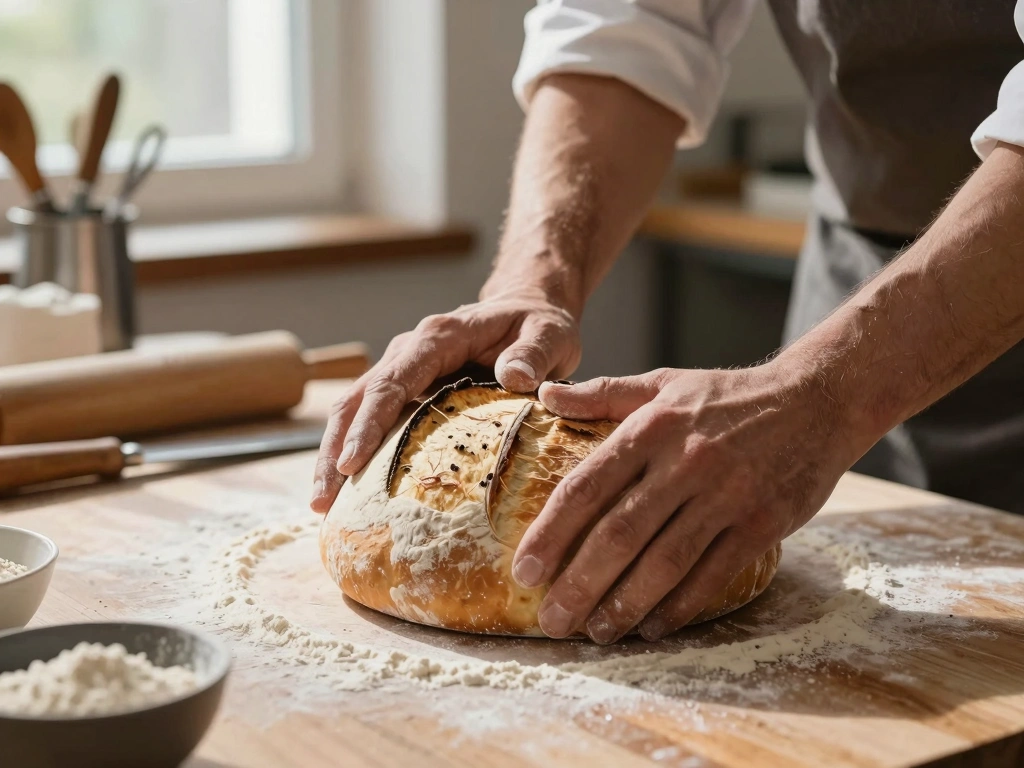
Additionally, the stretch and fold technique allows for better gluten development without overworking the dough. Competitors often practice these techniques repeatedly until they can perform them flawlessly under pressure. The ability to shape the dough into a tight boule or batard is also crucial, as it affects the final loaf's structure and presentation.
Understanding Flavor Profiles and Scoring
In competitive sourdough baking, understanding the flavor profiles of different flours and ingredients is vital. Bakers often experiment with various types of flour, such as rye, spelt, and kamut, to create unique taste experiences. Each flour contributes distinct flavors and textures, making it essential to choose wisely based on the desired outcome.
Additionally, judges look for complexity in flavor, which can be achieved through the use of different fermentation techniques, such as cold fermentation or preferments. Competitors should familiarize themselves with scoring criteria, which usually emphasize the balance of acidity, sweetness, and overall flavor complexity.
Preparing for Your First Tournament
Selecting the Right Ingredients and Equipment
Successful tournament preparation begins with the selection of high-quality ingredients. Bakers should invest in premium flours, such as organic or stone-milled varieties, as these can significantly impact the flavor and texture of the bread. Additionally, sourcing local ingredients, such as seasonal grains or herbs, can set a competitor's sourdough apart from the rest.
On the equipment side, having the right tools is essential. A high-quality Dutch oven or baking stone is crucial for achieving the perfect crust. Thermometers for monitoring dough temperature and digital scales for precise measurements are also recommended. Some competitors even invest in proofing baskets made of cane or rattan to ensure optimal shape and rise.
Practice Routines and Baking Schedules
To excel in a tournament, establishing a rigorous practice routine is necessary. Competitors should set aside dedicated time each week to refine their skills, experiment with new recipes, and practice under timed conditions similar to those they will face in the tournament. A common practice schedule might involve baking two to three loaves per week, focusing on different techniques each session.
Additionally, creating a baking schedule that includes rest periods for the dough, as well as time for personal reflection on improvements, can be beneficial. Keeping a baking journal to document successes and failures can provide valuable insights for future bakes.
Building a Support Network and Community
Participating in a baking community can provide invaluable support and resources for aspiring competitors. Joining local baking clubs, online forums, or social media groups can help bakers share tips, recipes, and experiences. Networking with other bakers can also lead to mentorship opportunities, allowing newcomers to learn from seasoned competitors.
Additionally, attending workshops or classes can enhance skills and provide a deeper understanding of sourdough baking techniques. Many professional bakers offer courses that focus specifically on competition preparation, providing hands-on experience and expert advice.
Judging Criteria and What Judges Look For
Presentation and Aesthetic Qualities
First impressions matter in sourdough competitions, and judges often evaluate the presentation of the loaves before tasting them. A well-shaped loaf should have a consistent color and a defined score pattern. Judges typically look for an appealing crust color, which should be golden brown, indicating proper baking.
Competitors should also pay attention to the overall appearance of the loaf, including its height and oven spring. A loaf that has risen well should have a domed top and a nice open crumb structure when sliced. Adding artistic touches, such as decorative scoring patterns or seeds, can enhance visual appeal and set a loaf apart.
Texture and Crust Evaluation
Texture is one of the most critical aspects of sourdough judging. Judges will evaluate the crust for crispness, thickness, and color. A well-baked sourdough should have a crunchy crust that contrasts nicely with a soft, airy interior. The crumb should be open and irregular, indicating proper fermentation and handling.
To achieve the ideal texture, bakers should focus on hydration levels and fermentation times. A higher hydration dough can lead to a more open crumb but requires careful handling techniques to prevent excessive stickiness. Competitors often experiment with different hydration levels to find the right balance for their specific recipes.
Taste and Flavor Complexity Assessment
Ultimately, the most crucial aspect of any sourdough competition is the taste. Judges assess flavor complexity, looking for a balance between the tanginess of the sourdough and the sweetness of the crust. A well-executed sourdough should have a rich, deep flavor profile that evolves with each bite.
Competitors often enhance flavor by incorporating various ingredients, such as herbs, spices, or even dried fruits. Understanding how these additions interact with the fermentation process is essential for creating a harmonious flavor. Additionally, bakers should consider the timing of these additions; for example, adding herbs during the mixing process can infuse the dough, while adding them later can result in a more pronounced flavor.
Advanced Strategies for Competitive Edge
Innovative Flavor Combinations and Techniques
To stand out in the competitive sourdough landscape, bakers must be willing to innovate. Exploring unusual flavor combinations, such as rosemary and lemon or fig and walnut, can create a memorable loaf that impresses judges. Furthermore, incorporating unique fermentation techniques, such as using a poolish or biga, can add depth to the bread’s flavor and texture.
Incorporating local or seasonal ingredients can also enhance the uniqueness of a loaf. For instance, using honey from a local apiary can introduce a distinct sweetness that contrasts nicely with the sour notes of the bread.
Adapting to Different Tournament Formats
Tournaments can vary widely in format, from timed challenges to themed competitions. Understanding the specific rules and expectations of each tournament is crucial for success. For example, in timed challenges, competitors may only have a limited window to mix, shape, and bake their bread, emphasizing the need for efficiency and focus.
Some tournaments also feature specific themes or ingredient restrictions, requiring bakers to think creatively and adapt their recipes accordingly. Being prepared to pivot and adjust techniques based on tournament guidelines can provide a significant advantage.
Staying Calm Under Pressure and Managing Time
The ability to stay calm under pressure is a vital skill for any competitor. Baking in a high-stakes environment can be daunting, but practicing mindfulness techniques such as deep breathing or visualization can help competitors maintain focus and composure during the event.
Time management is equally important; creating a detailed timeline for each stage of the baking process can help competitors stay organized and avoid last-minute panic. Using timers for specific tasks, such as fermentation or baking, can also ensure that bakers remain on track throughout the competition.